
India's growth, he said, remains resilient with low inflation, fiscal prudence and low current account deficit, talking about robust structural reform measures.

Are we adopting an idea whose time has come and gone? My feeling is, yes, says ex-banker C Joseph Chacko in the fourth article of the series on inflation targeting.

Tamal Bandyopadhyay offers some unsolicited advice for a government wh,ich came to power, with brute majority and the nation's pragmatic chief money man.

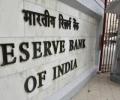
Reserve Bank of India Governor Shaktikanta Das tells Anup Roy, Raghu Mohan and Niraj Bhatt that it is time for banks to lower interest rates and start lending to cash-starved finance companies after due credit appraisal and proper risk assessment.

Rajan's remarks come as the Modi-led government completes one year.
The idea is to boost household savings and turn more of them into growth capital. If the plan succeeds, sustained eight per cent-plus rates of gross domestic product growth should be within reach in a few years.

'Tax dodging through tax havens is one of the ways multinational corporations and the super-rich in India are using to evade taxes.'

Just three years ago, at the end of March 2011, NRI deposits were only $52 billion, half of what they are today.

Two successive reports, one by Percy Mistry in 2007 and the other by Raghuram Rajan in 2008 had provided the RBI and the finance ministry with blueprints of what to do next. Both reports, unfortunately, was put on ice. The global meltdown saved the RBI. It also saved the finance ministry from having to work on the two reports.

Modi govt has a unique style of working, say experts.

Banks are cheating customers with rates that are unfairly high, discriminatory, and opaque, denying legitimate savings to borrowers, while the RBI has been looking the other way, says Debashis Basu.

11th-hour debt restructuring programme offered no concessions to creditors

The RBI has this year cut interest rates by 110 basis points in four instalments but banks have passed only a part of it to borrowers. Before the last reduction earlier this month of 35 basis points, the bank on an average had passed only 29 basis points out of 75 basis points cut affected during 2019.

The BRICS summit offers Modi an excellent platform to reach out to world leaders and conduct diplomacy on the very ticklish issue of reform of the world governance structure, and to exchange notes with his peers on international, regional and bilateral issues on the margins of the meeting, says Rup Narayan Das.

Echoing the position articulated by Prime Minister Manmohan Singh, China and Russia on Thursday warned that imminent withdrawal of fiscal stimulus by the US could have an adverse impact on the global economy and cautioned the Obama administration against it.

'Government of India has the right to give directions to RBI'.

India began the year on 97 in FIFA rankings, but after two wins, four draws and seven losses, the country ended 2019 at 108
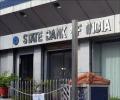
Home loans of up to Rs 75 lakh (Rs 7.5 million) would now be available to fresh borrowers at 10.10 per cent against the existing rate of 10.15 per cent, State Bank of India said in a statement.
There has been a decent growth in FDI proposals and new announcements in India to attract foreign investment.

'Everyone confuses GDP to be a measure of output, when it is actually a measure of income.'

'By demonetising higher denominations of currency notes, we have taken out the vehicle for corruption.' 'But the motive is still there.'

The vote leaves Greece in uncharted waters: risking a banking collapse that could force it out of the euro.

'If the government spends Rs 10 lakh crore this year then you would be looking at a GDP growth of minus 5 per cent.' 'If you do not do this, you will be looking at GDP growth between minus nine and minus 10 per cent.'

Attributing price rise to global factors and higher Minimum Support Price (MSP), Prime Minister Manmohan Singh on Wednesday said the government has tried to protect the interest of poor people by maintaining supply through the PDS system.

India will have the presidency of the BRICS' $100 billion New Development Bank for six years with headquarters in China that will become operational in about two years, a major step for reshaping the international financial system dominated by the West.

The United States Select Committee on Intelligence's damning report on the Central Intelligence Agency throws spotlight on the brutal tactics adopted by CIA agents to elicit information from terror suspects and yet its ineffectiveness in the sense that it delivered no 'ticking time bomb' data that prevented an attack.

On the index, India has a score of 4.52 while that of Switzerland is 5.81

A private entity using our data for commercial benefits is infinitely more dangerous than a government entity overseeing operations with a defined purpose of internal security oversight, says Sriram Balasubramanian

The situation in Greece worsened with banks closed for a 2nd week.

With commodity markets remaining soft and uncertain, it is likely the money will flow into equity markets with strong upsides, such as India.

Athens bowed to demands to phase out tax breaks for its islands.

NCLT allows Shivinder to withdraw petition against his brother Malvinder. Final decision to be taken by family members in their presence.

The proposals appeared so far apart that success seemed higly unlikely

A year ago, India's #MeToo movement witnessed women across India speak up against sexual harassment. Nikita Puri assesses what, if anything, has changed.

It is clear as daylight to anyone that a charge or a cost to simply reduce interest on a floating rate loan is extortion, but this is exactly what the RBI has officially sanctioned, says Debashis Basu.

Nitin Desai suggests some concrete measures to revive investment and boost growth.

The government must undo the damage inflicted by the flawed policies of globalisation, and India should be converted into a country where entrepreneurs can thrive and the entire population can participate in the economy, says Arvind Kumar.

What China's market crash means for India
He added that the risks can increase if the Chinese slowdown gathers more speed.
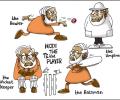
'Nationalism built on divisiveness cannot strengthen the country, or help the economy improve its performance,' points out T N Ninan.
 © 2026 Rediff.com - Advertise with us - Disclaimer - Privacy Policy - Sitemap - Feedback - About us - Terms of use - Grievances